
-
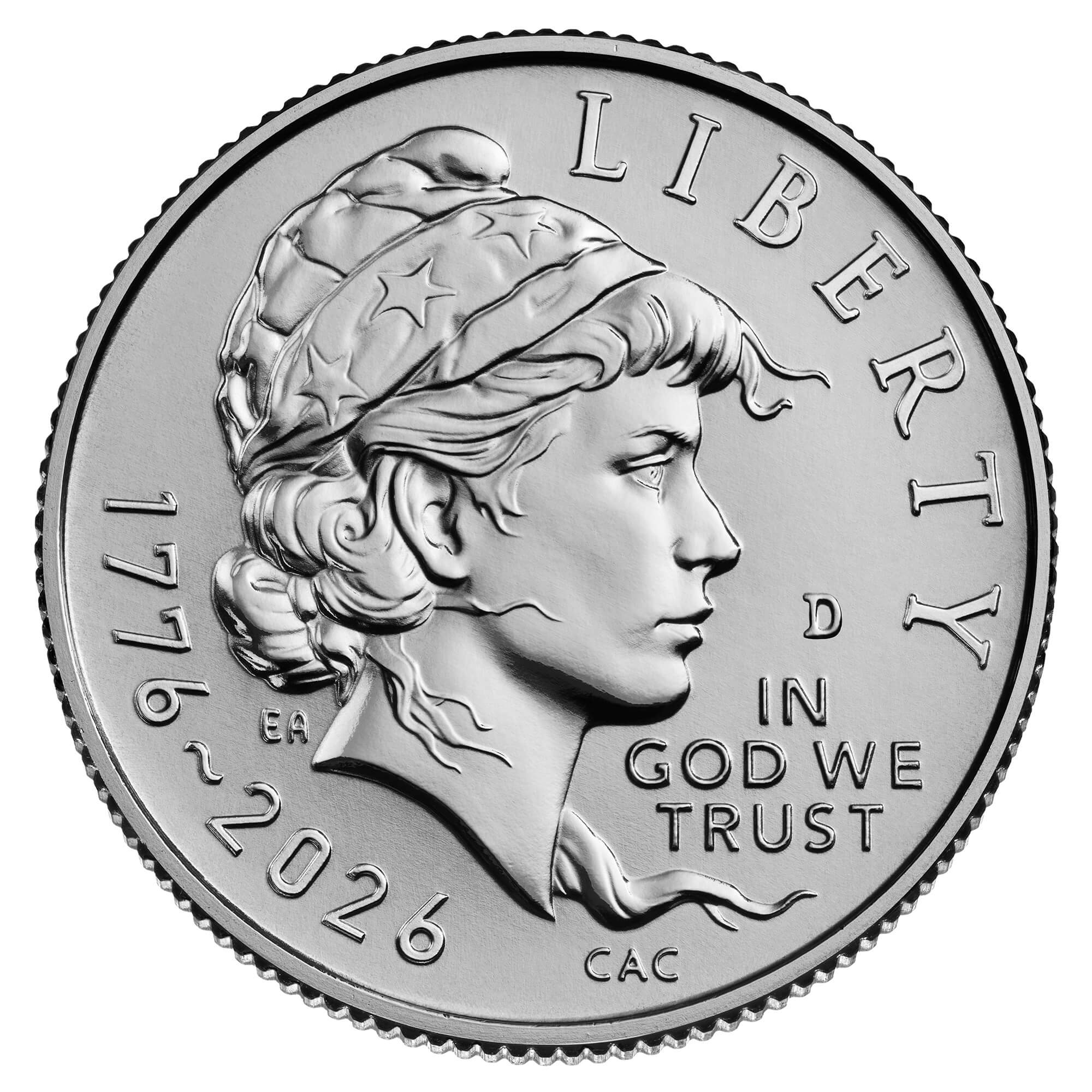
2026 – Coins – Semiquincentennial Coin Program is for 2026, which marks the 250th anniversary of the United States of America. Many of the 2026 Coins will feature a dual date of 1776 – 2026. Frist, two of the three coins still in circulation, the Dime and Quarter, will have a complete overhaul of there…
-

What are Mardi Gras Doubloons? Mardi Gras doubloons are tokens that are thrown or given out by krewe member to celebrate the krewes theme that year. Most common doubloons are made of aluminum, however they can be made of wood, copper, brass, bronze, silver, and other materials. They were invented by Herbert Alvin Sharpe for…
-
Some coins bear a mark of distinction… Each branch of the United States Mint has a code letter called a “mint mark” to show which branch struck a coin, but not every coin has a mint mark. The Mint has used seven different mint marks for eight branches because one mark was recycled! Denver’s “D”…
-
Coin Fun Facts There was a nickelless nickel. During World War II (1942 to 1945), the five cent coin was made of an alloy of copper, manganese, and silver. Nickel was kept aside for use in the war effort. The buffalo was once a newcomer. When the bison appeared on the Buffalo nickel (1913 to…
-
There were copper pennies and white cents? Yes, there were “white cents” that didn’t look at all like pennies. These were the Flying Eagle one cent coins of 1856–58 and the Indian Head one cent coins of 1859 –64. They were made frommetal that contained 88 parts copper to 12 parts nickel, which gave them…
-
The nickel had a growth spurt. The first five-cent pieces were small. Called “half dimes,” they weighed exactly half as much as a dime because their values were based on the amount of silver used to make them. The half dime’s tiny size(about 16 mm) meant the coin was hard to handle and easy to…
-
COIN FUN FACTS The Mint has branches— and some get pruned… The United States Mint began making coins in Philadelphia, Pennsylvania, which was the capital of the United States at the time. The first branches opened in Louisiana, Georgia, and North Carolina because gold was discovered nearby, but those branches are not operating today. Branches…
-
If you’re worth 25 cents, why not say so?… The quarter dollar made in 1804 was the first silver coin in the United States Mint’s history to have a value on it! Yes, up until then, all silver and gold American coins were non-denominated. People had to know by their size how much they were…
-
Coin Fun FactsHow much was in that first batch? The Mint produced its first circulating coins—all $111.78 worth of them—in March 1793. That first batch consisted of 11,178 copper cents. Soon after, the Mint began issuing gold and silver coins as well. Ben Franklin helped to stop counterfeiters… In the 1700s, it was pretty easy…
-
Coin Fun Facts This museum was made from gold. The donation of $508,316 in gold, from the estate of English scientist James Smithson, was examined in the Philadelphia Mint before being used to create the Smithsonian Institution. Today, the Smithsonian Institution is the largest museum complex in the world, and includes many world renowned museums…